
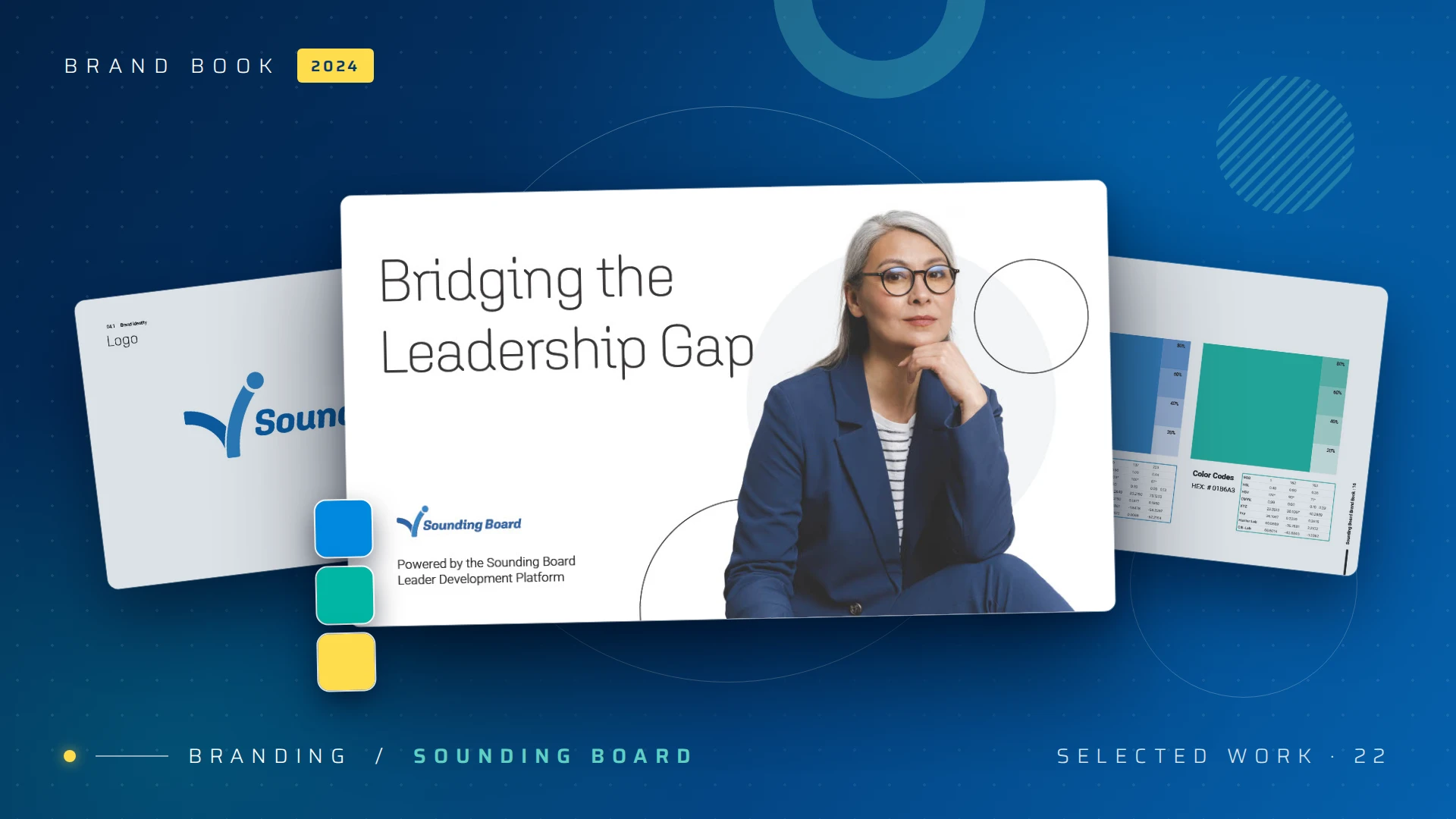
Revitalizing Sounding Board's brand to bridge the leadership gap.
— Brand identity / 2024
A confident, premium identity system that repositioned a leadership-development platform for top-tier global enterprises, including Intel, EY, and Cloudera. Brand voice, visual language, and design system, recalibrated end-to-end.
— 01 / The brief
Why it exists
Five generations, one workforce.
For the first time, five generations (Traditionalists through Gen Z) share the same workplace, each with its own world view, relationship to authority, and idea of what good work looks like. Sounding Board and a team of authors wanted a fifteen-page whitepaper that took that complexity seriously and argued for personalized, coaching-led leadership development.
The design challenge sat one level beneath the words. Generational content almost always collapses into cliché: color-blocked cohorts, cartoon avatars, a boomer-in-a-suit next to a Gen-Z-with-a-phone. The brief, as I framed it, was to make a document that refused the stereotype its own subject invited, and to let the design carry that argument quietly.
A one-size-fits-all approach to leadership development for all generations simply won't work.

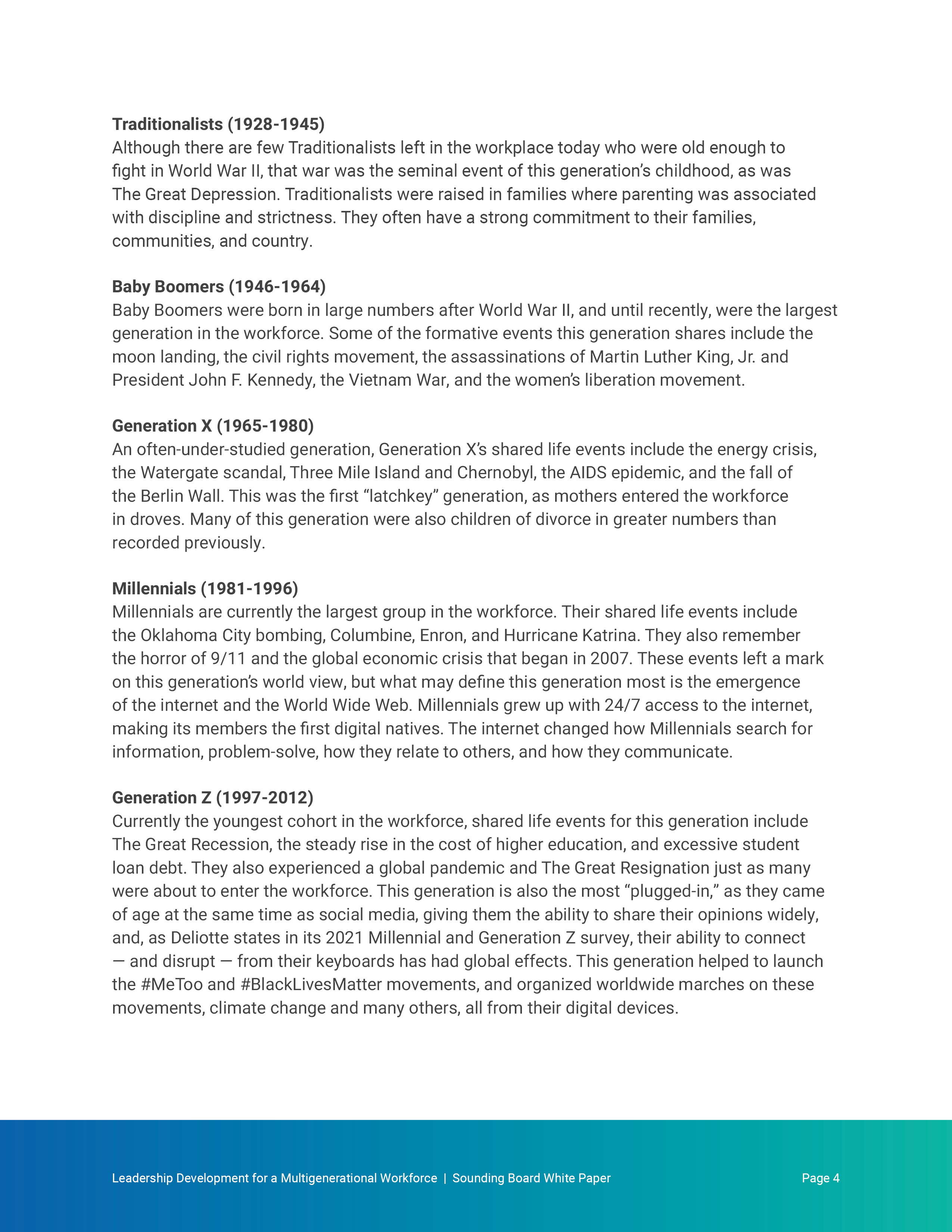
Opening pages — the brief and the generational overview, set in long-form measureWhitepaper pp. 2 & 4 · click to enlarge
— 02 / The device
Cover & grid
A grid of faces that doubles as the data.
The cover is the whole thesis in one image: a tight grid of portraits: different ages, different backgrounds, the same frame, the same weight. No one face is bigger. The spread of people is the spread of the workforce, so the cover works as data visualization and emotional argument at once, before a single statistic appears.
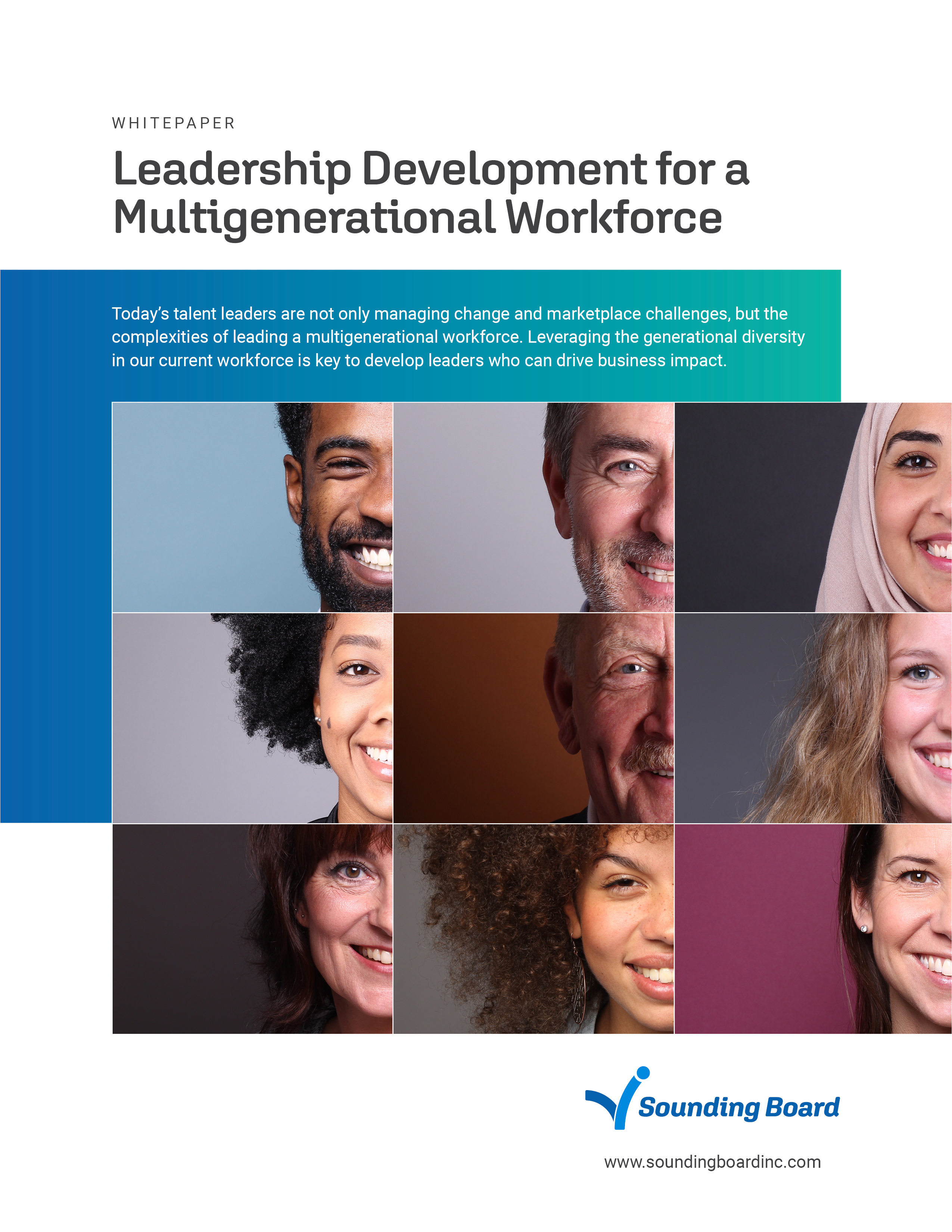
The cover — nine equal-weight portraits beneath the title and brand gradient blockWhitepaper cover · p. 1
Decision 01
The grid is the chart
Rather than open on a stat or a stock hero, the portrait grid encodes the argument structurally: many equal cells, one shared field. It reads as workforce before it reads as decoration.
Decision 02
No generation-coded color
The obvious move (five color blocks, one per cohort) would have caricatured the people it described. I kept the only system color Sounding Board's teal-to-navy gradient, so generations are never reduced to a swatch.
Decision 03
Faces over icons
Every cohort is a real, dignified portrait: warm, direct, eye-level. The humanity is the point; it's also what keeps the document from feeling like an infographic about strangers.
— 03 / The framework
Five cohorts
One face for each cohort, not one cliché.
The interior runs each generation in turn: the events that shaped its world view, its relationship to authority, its work-style preferences. On the page, each cohort gets a single portrait (one person, photographed the same way as every other) paired with its defining years. Consistent treatment is the equalizer; difference lives in the words, not the styling.

Traditionalists
1928–1945 · 2%

Baby Boomers
1946–1964 · 25%

Generation X
1965–1980 · 33%

Millennials
1981–1996 · 35%

Generation Z
1997–2012 · 5%
One portrait per generation — identical photographic treatment, paired with years and workforce shareWhitepaper pp. 4–6
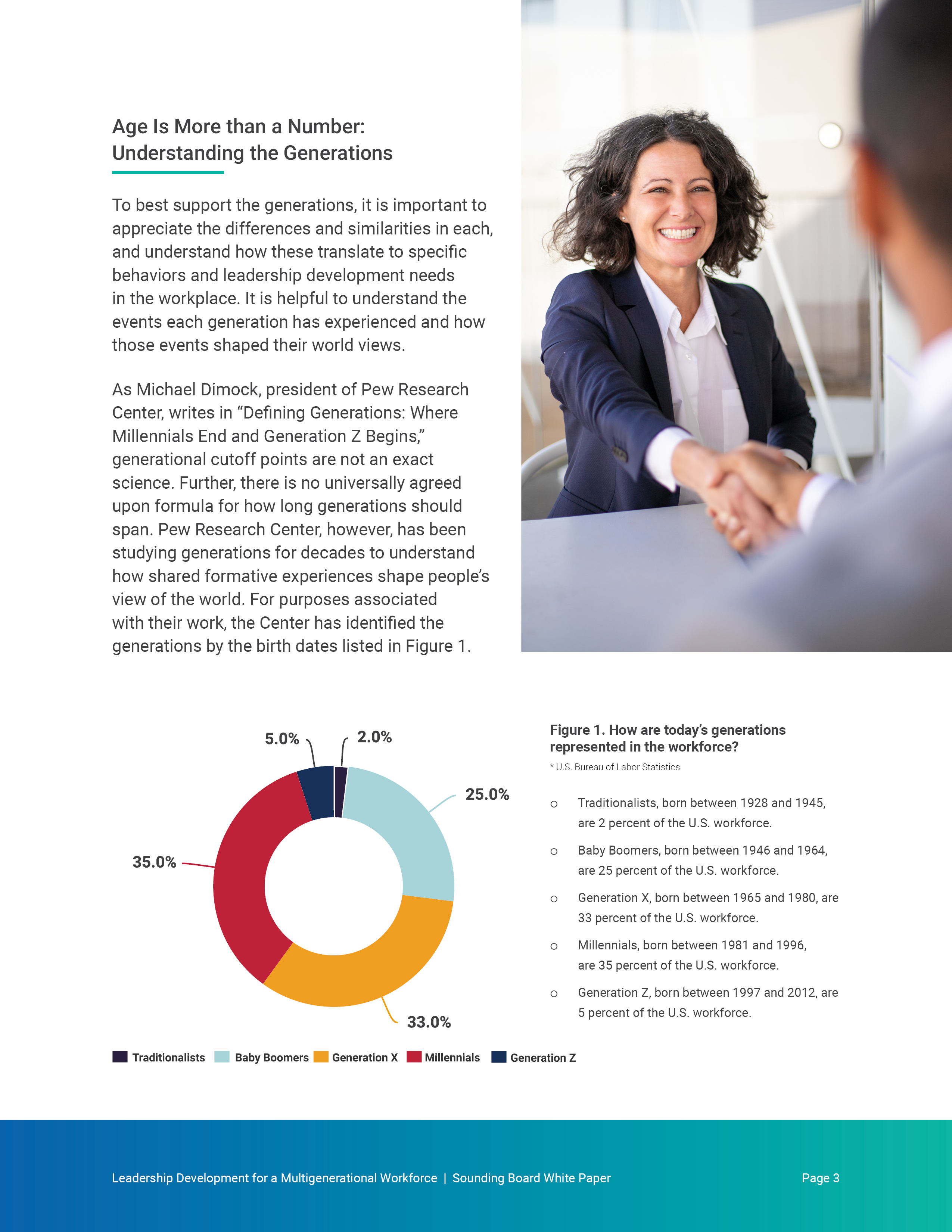
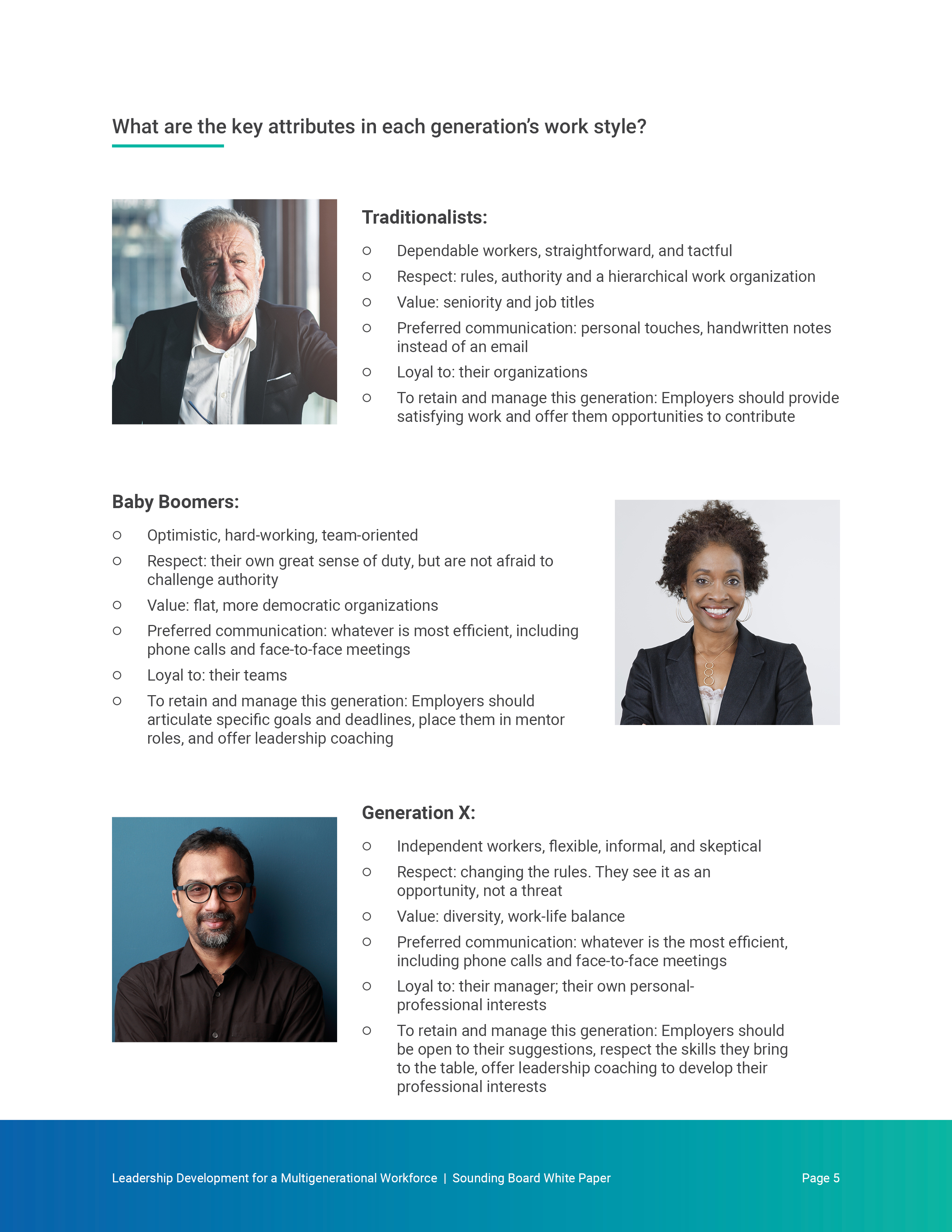
The actual pages — Figure 1's quiet donut, and the alternating portrait-and-list work-style layoutWhitepaper pp. 3 & 5
33%
Generation X — the quiet plurality of today's workforce.
35%
Millennials — currently the single largest group.
5
Generations sharing the workplace at the same time.
71%
Of Gen Z value working with coaches and mentors.
Figure 1, retold — workforce composition as restrained type, never a 3-D pieU.S. Bureau of Labor Statistics
— 04 / The system
Restraint
One brand gradient, one flourish.
Across fifteen pages the visual system stays deliberately spare: Sounding Board's teal-to-navy gradient on section breaks, generous measure for long-form reading, and candid workplace photography chosen to carry the emotional beats the copy states plainly. The single conceptual illustration (hands passing across a ladder) earns its place precisely because it's the only one.
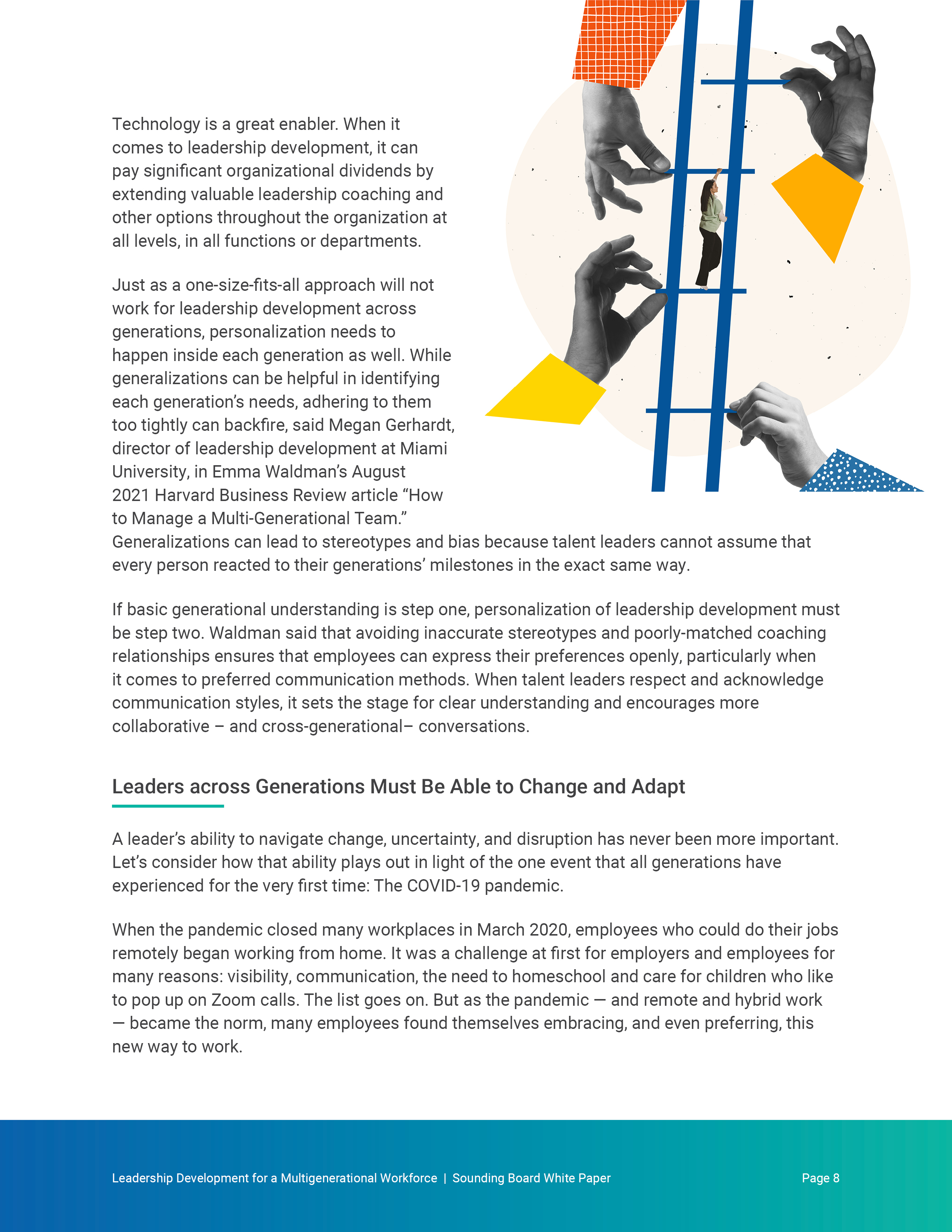
Where the design lets itself be expressive.
- A single collage (the climbing-and-helping-up metaphor) against the brand's cream and gradient accents.
- Cut-paper geometry borrowed from the logo's arc motif, keeping the flourish on-brand.
- Everywhere else, photography and type do the work, so this page lands.
The lone illustration — personalization, drawn once and not repeatedWhitepaper p. 8
Decision 04
Restraint as a position
The subject begs for novelty on every page. Holding to one gradient and one illustration makes the document feel like considered thought-leadership, not a deck performing its own cleverness.
Decision 05
Photography as argument
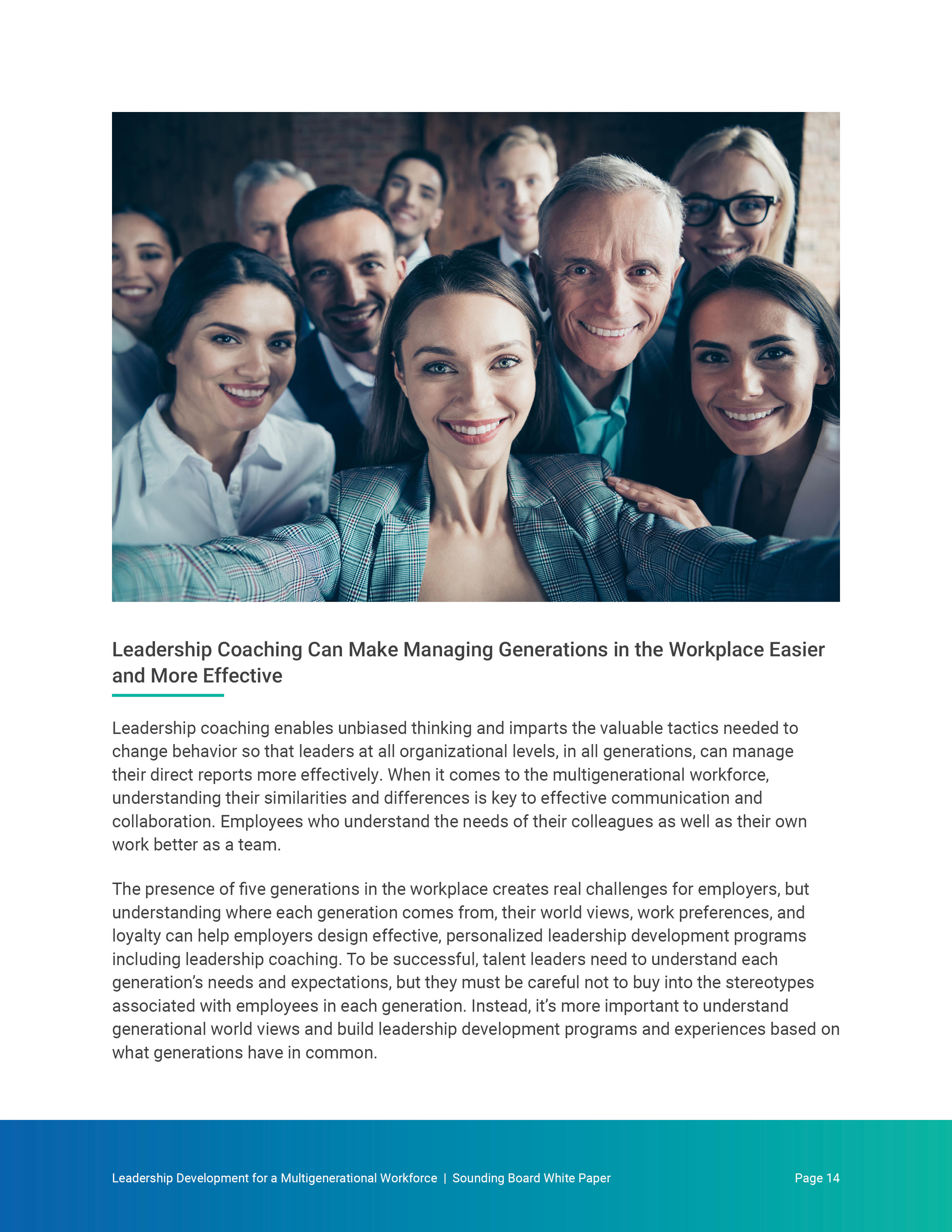
A handshake, a phone in hand, a leader head-in-hands on a stairwell: each image is chosen to feel the paragraph beside it, so the emotional case never has to be spelled out.
— 05 / The proof
Data & retention
The case for coaching, in real numbers.
The back half builds the business argument: remote and hybrid work changed where and how each generation wants to work, and The Great Resignation exposed how often the manager is the reason people leave. The whitepaper answers with tech-enabled, personalized leadership coaching, and proves it with Sounding Board's own customer data.

UserTesting · automated coach matching
- 97% satisfaction with Sounding Board's automated coach-matching model.
- 91% average coach rating after the very first session.
- 93% said their coaching was off to a good start.
- 86% understood how coaching could work for them.
31%
Gen Z — most likely to leave their jobs (Figure 2).
27%
Millennials — close behind, leading The Great Resignation.
14%
Generation X.
13%
Baby Boomers — least likely to leave.
Figure 2, retold — attrition by generation, ranked plainlyWhitepaper p. 12
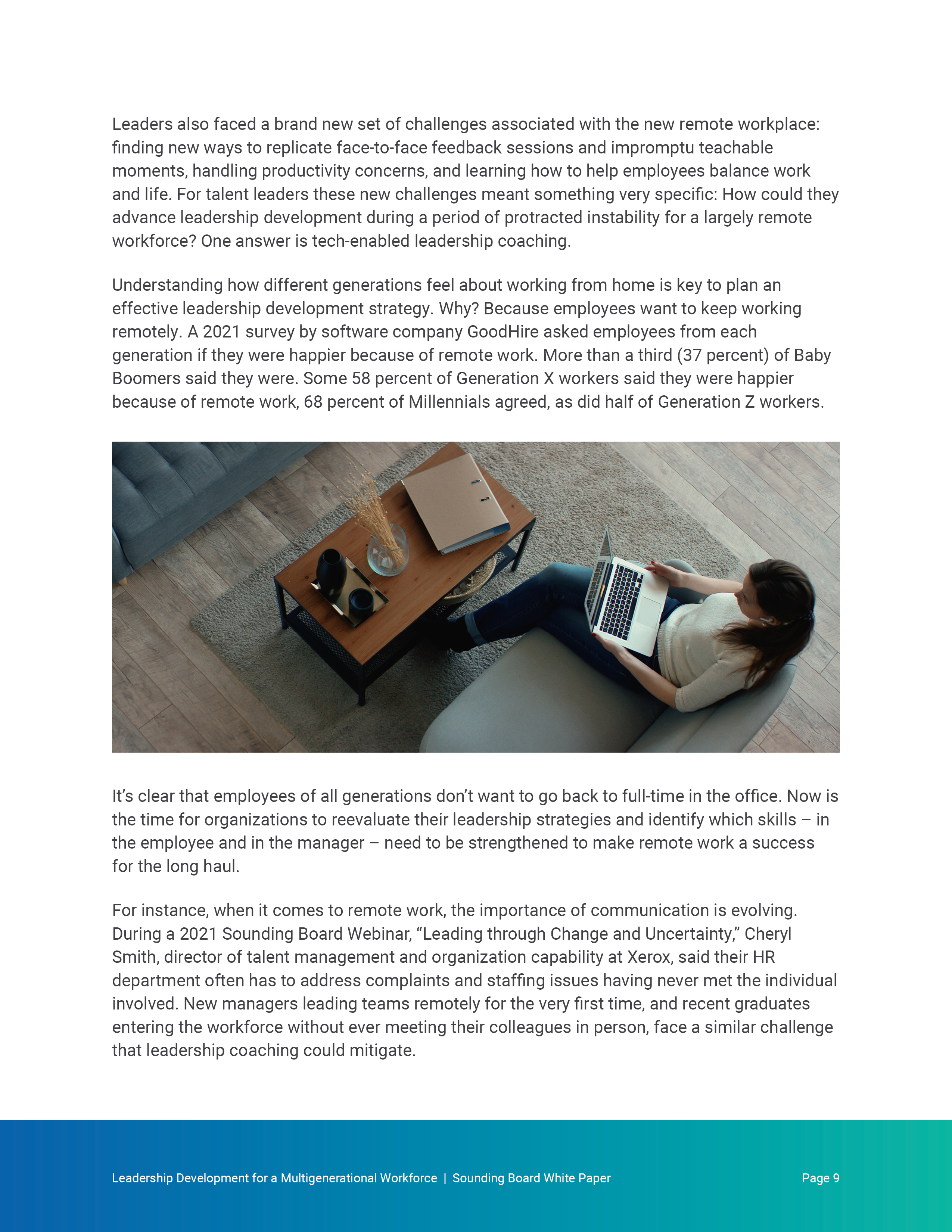
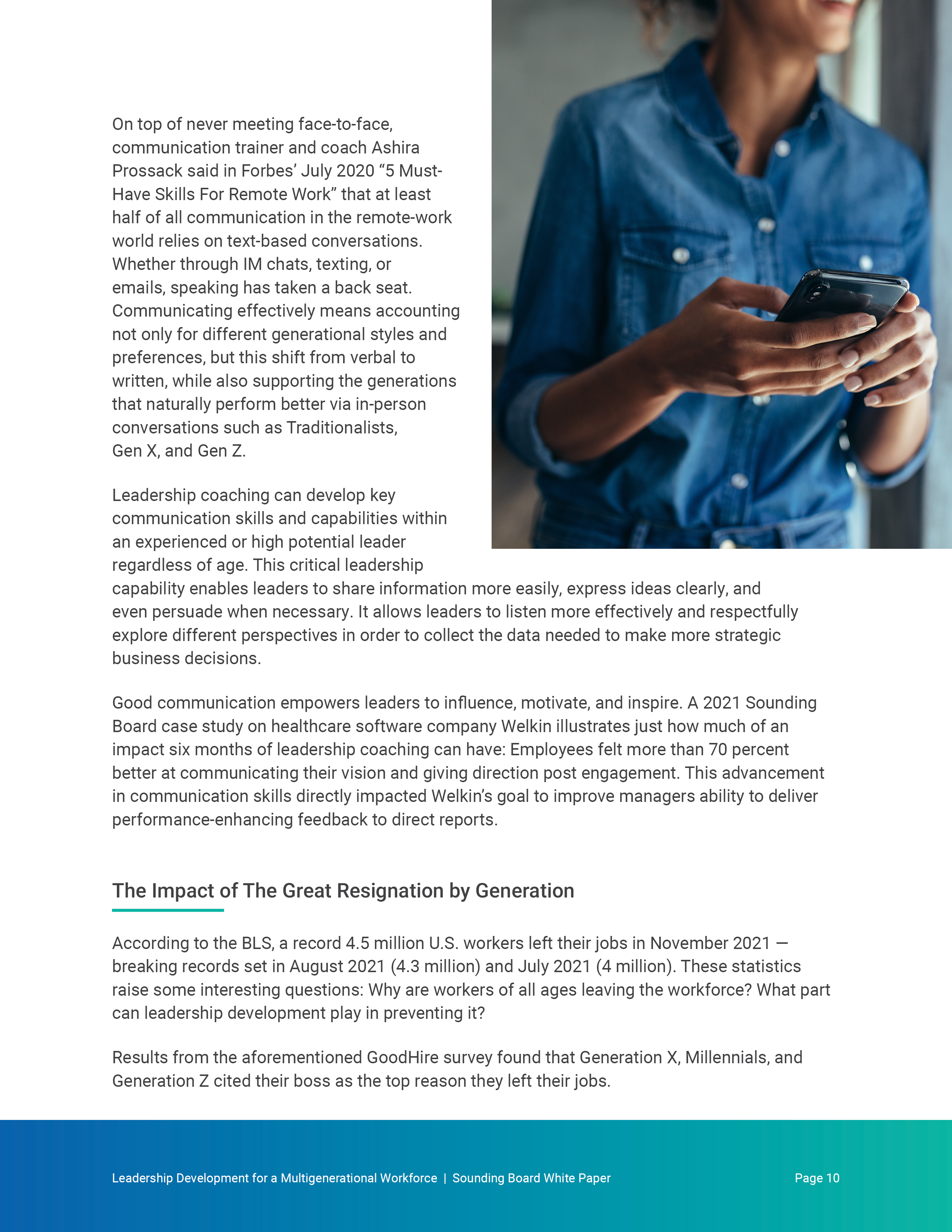
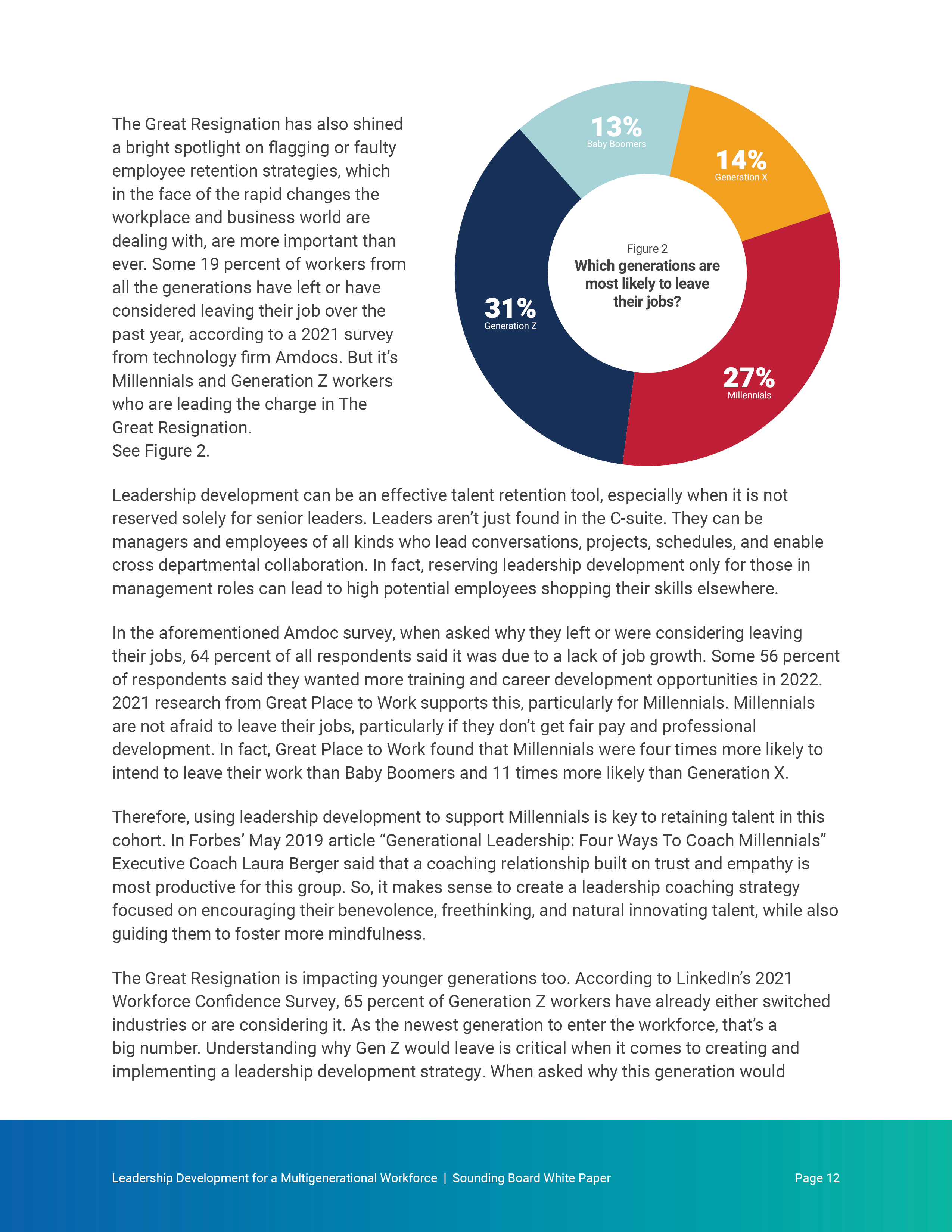
Remote, hybrid & the attrition chart — photography carries the emotion; Figure 2 ranks who's leavingWhitepaper pp. 9, 10 & 12
— 06 / Impact
What it did
A thought-leadership signal that also sells.
The finished whitepaper worked on two fronts: a credible point of view that signaled Sounding Board's expertise to talent and HR buyers, and a quiet sales-conversation prop that argued for personalized, coaching-led development without ever performing the pitch. It closes the way it opens: on people, together, in one frame.
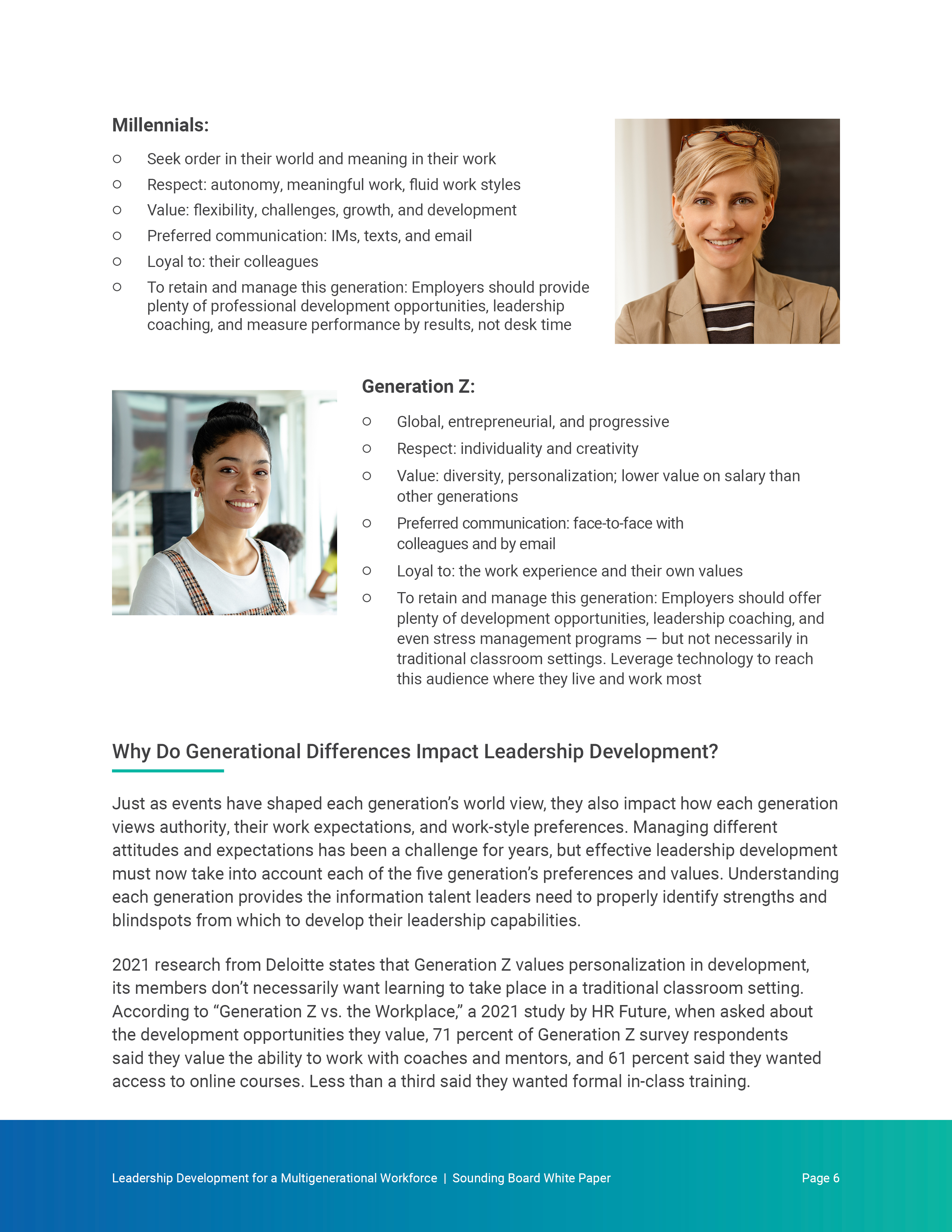
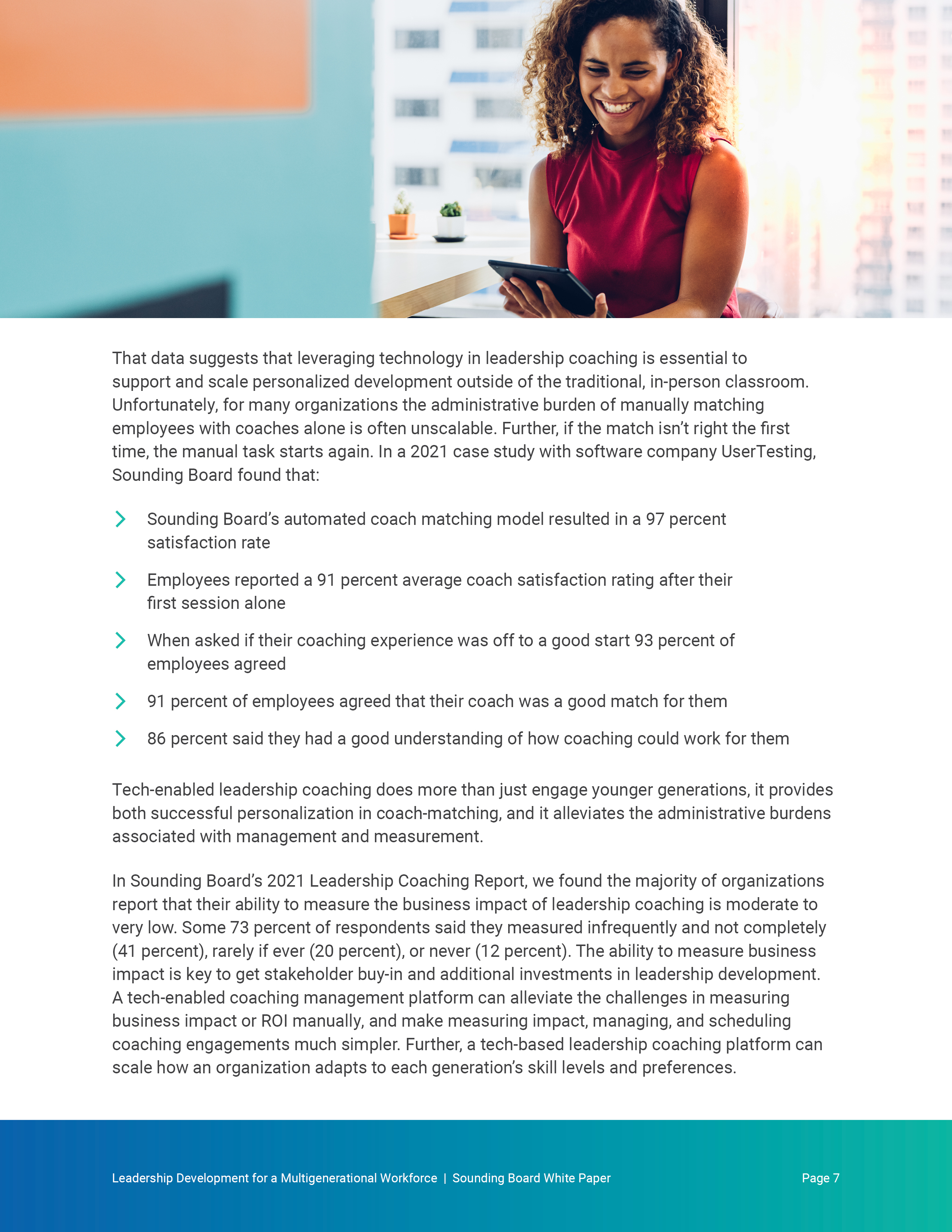
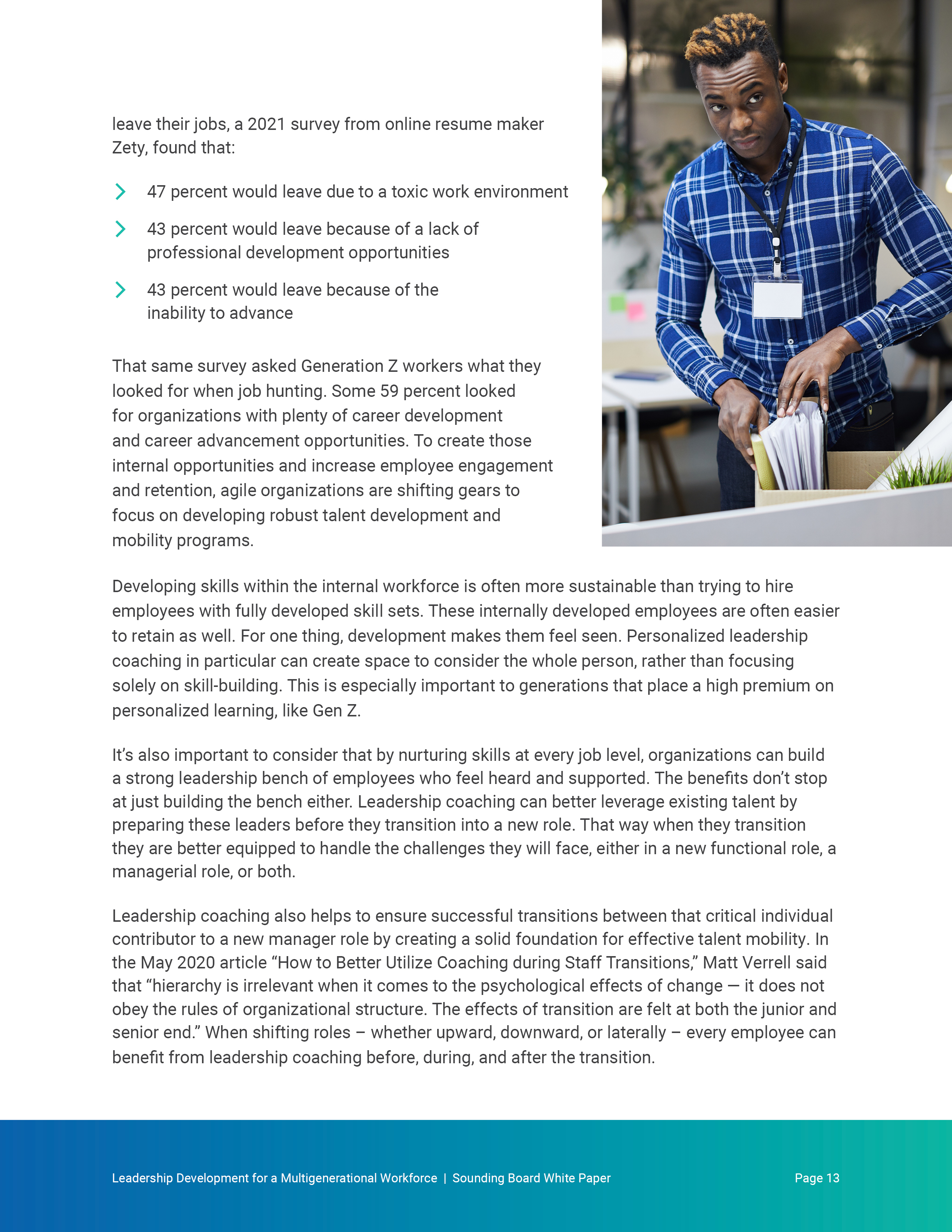

The full read — all fifteen pages, cover to closeClick any page to enlarge
”
— The takeaway
When the subject is people, the most persuasive design decision is to refuse the stereotype, and let equal, human portraits make the argument the copy only states.
Peter Loebbecke · Creative Director