
 Peter Loebbecke · Sr. Creative Director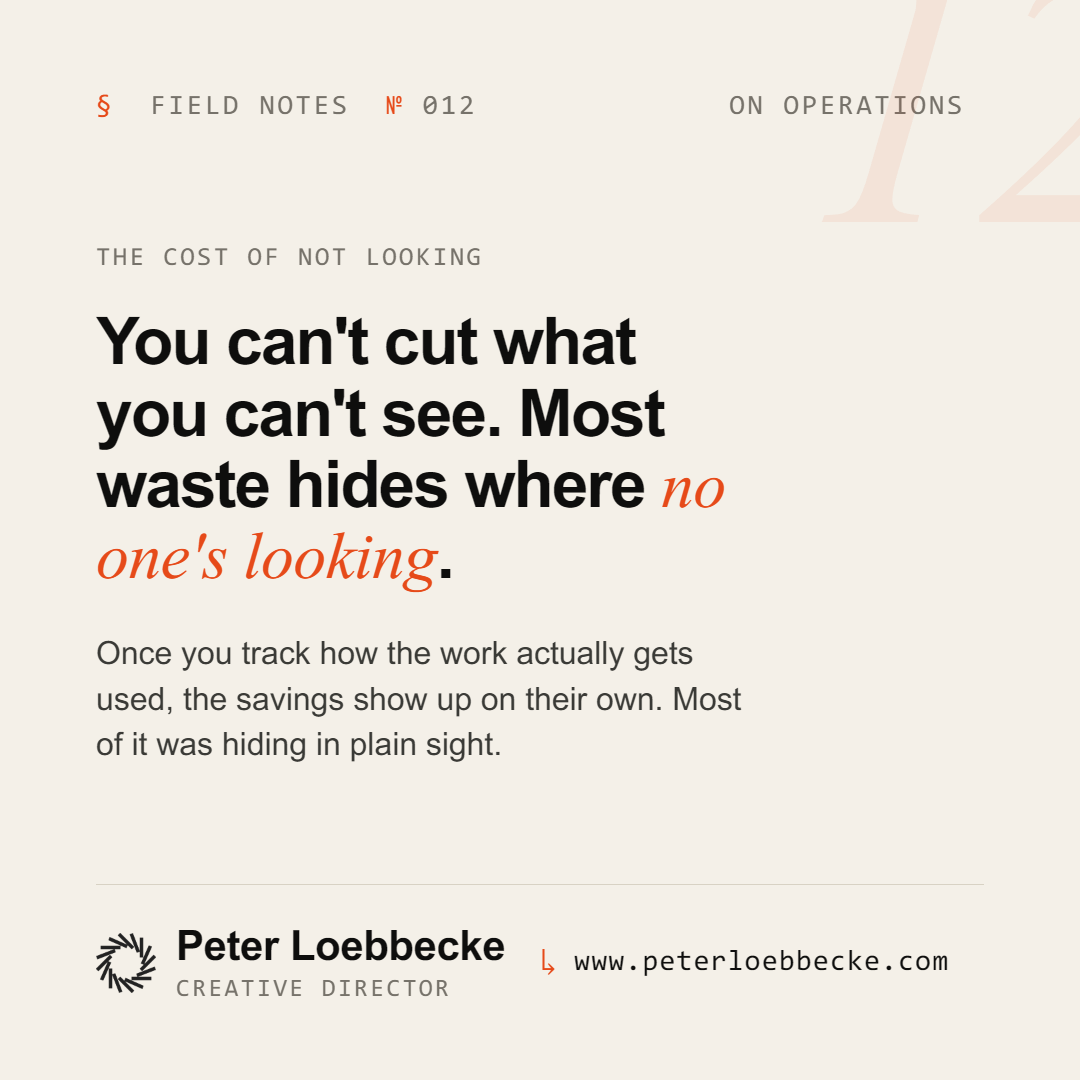
When a team is asked to cut costs, the first instinct is to cut the visible things: headcount, tools, the obvious line items. The bigger savings are usually somewhere no one is looking, in how the work actually gets done.
You can't cut what you can't see. So before cutting anything, I track it: which deliverables actually get used, which steps get redone, where the same asset gets rebuilt three times because no one knew it existed. The waste is rarely dramatic. It's ordinary, repeated, and invisible until you measure it.
Once it's visible, the savings show up on their own. Most of it was hiding in plain sight, paid for quietly, week after week, by people too busy to notice.
Written by Peter LoebbeckeFound this useful? Say hello on LinkedIn ↗